
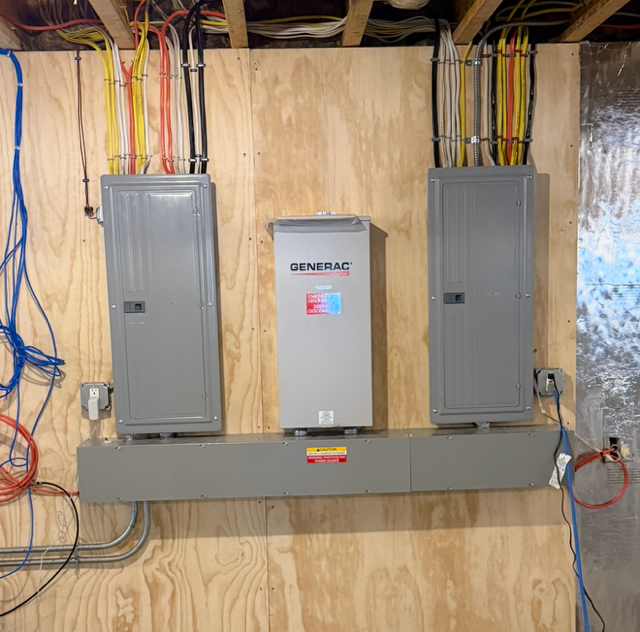
Distribution Systems That Handle Modern Electrical Loads
Electrical Panel Installation in Seekonk, MA, Providence, RI and the surrounding towns for new construction, renovations, and complete electrical system replacements
Every circuit in a property relies on the electrical panel to safely distribute electricity, protect wiring from overload, and disconnect power when faults occur. New construction projects, building additions, and complete electrical system replacements all require panel installations that match calculated electrical loads and provide enough circuit spaces for current and future needs. Tarinelli Electric Inc. installs electrical panels for residential and commercial properties in Seekonk, MA and Providence, RI using load calculations to determine correct panel size, breaker ratings, and wire configurations that meet National Electrical Code requirements.
Panel installation involves mounting the enclosure at a code-compliant location, connecting service entrance conductors, installing individual circuit breakers sized for each wire gauge and load type, and establishing proper grounding and bonding connections. Load calculations account for lighting circuits, appliance requirements, HVAC equipment, and any specialized loads like electric vehicle charging or workshop equipment that require dedicated circuits rated for higher amperage.
Request a detailed estimate that includes load analysis and panel specifications for your project.
How Panel Installation Addresses Future Electrical Needs
Properly sized panels include additional circuit spaces beyond what's immediately required, allowing for future appliances or renovations without replacing the entire panel. Installation begins with calculating total electrical load by adding up the amperage requirements for all circuits, then selecting a panel with sufficient main breaker capacity and enough physical spaces for individual branch circuit breakers. Each circuit breaker is matched to the wire gauge it protects—15-amp breakers for 14-gauge wire, 20-amp breakers for 12-gauge wire, and larger breakers for high-demand circuits like electric ranges or central air conditioning.
After installation is finished, you'll have clearly labeled circuits that identify what each breaker controls, sufficient capacity to run all electrical equipment without overloading the system, and protection that disconnects power automatically when circuits experience shorts or ground faults. The panel provides a central location for shutting off individual circuits during maintenance or disconnecting all power during emergencies.
Installation also includes connecting the grounding system to ensure fault current has a safe path back to the electrical source, installing arc-fault and ground-fault circuit interrupters where code requires them, and mounting the panel at a height and location that meets accessibility requirements while protecting the equipment from physical damage or moisture exposure.
Common Questions About Panel Installation Projects
Customers planning new construction or electrical system replacements typically ask similar questions about panel specifications and installation requirements.
What size electrical panel do I need for a new home?
Panel size depends on total calculated load, which includes square footage, heating and cooling equipment, major appliances, and any high-demand circuits—most modern homes require 150 to 200 amp panels with at least 30 to 40 circuit spaces to accommodate current and future electrical needs.
How are circuit breakers matched to the wiring they protect?
Breaker amperage must never exceed the wire's rated capacity, so 14-gauge copper wire requires 15-amp breakers, 12-gauge wire uses 20-amp breakers, and larger wire sizes support correspondingly higher breaker ratings based on conductor ampacity tables in the electrical code.
What's the difference between main breaker and main lug panels?
Main breaker panels include a large breaker that disconnects all power to the panel and limits total current draw, while main lug panels receive power from a breaker located elsewhere and are typically used as subpanels fed from another distribution point.
Where should electrical panels be located in properties?
Code requires panels in accessible locations with adequate working clearance, typically interior spaces protected from weather, away from plumbing and gas lines, and positioned where moisture accumulation won't corrode connections or create shock hazards.
How long does a typical panel installation take?
New panel installations in construction projects generally require four to eight hours depending on the number of circuits, whether service entrance work is included, and how far individual circuits need to run from the panel to their endpoints throughout the building.
Tarinelli Electric Inc. handles panel installation projects that provide reliable electrical distribution for properties throughout Seekonk, Providence and nearby areas from single-family homes to commercial buildings. Reach out by calling (401) 365-7269 when planning construction or system replacement projects that require professional panel installation and load calculation services.