
Wiring That Delivers Power Safely and Reliably
Electrical Wiring and Rewiring in Seekonk, MA, Providence, RI and nearby towns for remodels, additions, older homes, and systems with damaged or outdated conductors
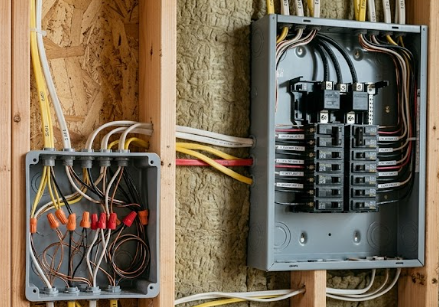
Electrical wiring eventually deteriorates from age, environmental exposure, physical damage, or installation methods that no longer meet code standards, creating conditions where electricity cannot flow safely to outlets, lighting, and appliances. Tarinelli Electric Inc. installs new wiring for building additions and remodeling projects while also providing complete and partial rewiring solutions that replace damaged or obsolete conductors in older properties throughout Seekonk and Providence Wiring projects follow current National Electrical Code requirements for conductor sizing, insulation types, routing methods, and connection practices that ensure electricity reaches every part of a building without creating fire or shock hazards.
This service addresses problems created by cloth-insulated wiring that has become brittle, aluminum wiring that requires special handling, undersized conductors that overheat under modern electrical loads, and damaged wiring exposed to moisture or rodent activity. Installation involves routing new conductors through walls, ceilings, and floors using appropriate protection methods, making secure connections at junction boxes and electrical devices, and verifying that wire gauge matches breaker size and load requirements for each circuit.
Schedule an electrical wiring assessment to identify conductors that need replacement before problems escalate.
What Proper Wiring Installation Actually Accomplishes
New wiring uses copper conductors with modern insulation rated for the temperatures and conditions they'll encounter, sized according to the current they'll carry and protected by appropriately rated breakers. Conductors are secured at required intervals, protected from physical damage where they pass through structural members, and connected using methods that create mechanically strong and electrically sound joints at every termination point. Circuits include ground wires that provide a fault current path, reducing shock risk and allowing breakers to trip quickly when problems occur.
After rewiring is complete, outlets deliver consistent voltage without voltage drop that dims lights or reduces appliance performance, circuits handle their designed loads without overheating connections or tripping breakers, and wiring throughout the property meets inspection standards for insulation integrity, conductor sizing, and installation workmanship. Properties with updated wiring no longer face the fire risk associated with deteriorating insulation or connections that generate heat through high resistance.
The scope varies depending on whether projects involve complete rewiring that replaces all conductors in a building, partial rewiring that addresses specific circuits or areas showing problems, or new circuit installation for additions and renovations where electrical service needs to reach spaces that previously had no power distribution. Some rewiring projects require opening walls and ceilings to access existing wiring, while others use available pathways like basements and attics to minimize structural modifications.
Answers to Frequent Wiring Questions
Homeowners facing wiring projects often have questions about when replacement becomes necessary and what the work involves, particularly in older properties where wiring problems aren't immediately visible.
What types of wiring problems require professional attention?
Conditions that need correction include outlets or switches that feel warm, visible damage to wire insulation, circuits that trip breakers without obvious overload, burning odors near electrical devices, and any wiring that uses obsolete materials like knob-and-tube or deteriorated cloth insulation.
How do electricians route new wiring without destroying walls throughout the house?
Installation techniques include fishing wires through existing wall cavities using flexible tools, running conductors through basement or attic spaces where framing is accessible, and making strategic access openings at locations that minimize visible damage and simplify patching after wiring is complete.
Why is aluminum wiring considered problematic in older homes?
Aluminum conductors expand and contract more than copper when heated and cooled by electrical current, which can loosen connections over time and create high-resistance joints that overheat—properties with aluminum wiring require either complete replacement or special connection methods at every termination point.
When should I rewire during a renovation instead of waiting?
Any project that opens walls or ceilings provides an ideal opportunity to replace wiring while access is easy and patching work is already planned, avoiding the higher cost of accessing concealed wiring later when problems eventually develop in aging conductors.
What wiring challenges are specific to older homes in Seekonk?
Properties built before modern codes often have ungrounded two-wire circuits, insufficient circuit capacity for current appliance loads, wiring routed through areas now considered wet locations, and insulation types that deteriorate faster in the humid conditions common to coastal New England regions.
Tarinelli Electric Inc. completes wiring projects that improve electrical safety and reliability for properties throughout Seekonk, whether you're remodeling one room or rewiring an entire older home. Contact us at (401) 365-7269 when planning renovation work or when existing wiring shows signs of damage or deterioration that requires professional replacement.