
Safe Portable Generator Connection to Your Panel
Generator Interlocks in Seekonk, MA, Providence, RI and nearby towns for properties with portable generators that need safe connection to existing electrical systems
Connecting a portable generator directly to your electrical panel without proper safety equipment creates a deadly backfeeding hazard where generator power flows backward through the meter into utility lines, endangering utility workers and neighbors. Generator interlock systems prevent this by mechanically ensuring that utility power and generator power cannot connect to your panel simultaneously. Tarinelli Electric Inc. installs code-compliant generator interlocks that allow you to safely power selected circuits during outages while completely isolating your electrical system from the utility grid.
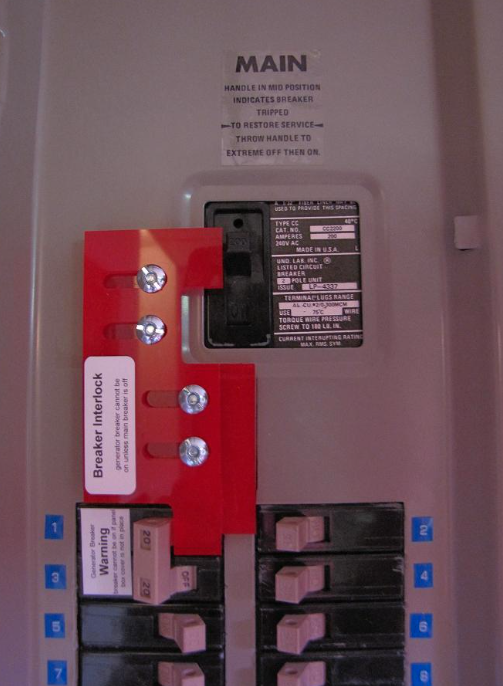
An interlock kit mounts to your existing electrical panel and includes a sliding plate that physically blocks the main breaker from closing when the generator breaker is on, and blocks the generator breaker when the main breaker is on. This mechanical interlock makes it impossible to accidentally energize utility lines with generator power. Installation also requires a power inlet box mounted outside your home where the generator connects through a weatherproof cord, and a dedicated breaker in the panel that supplies power to circuits you select during an outage.
Arrange an interlock installation consultation to verify compatibility with your electrical panel and generator specifications.
Why Interlocks Work for Backup Power
The interlock plate creates a physical barrier that prevents both the main utility breaker and generator breaker from being in the on position at the same time, which eliminates backfeeding risk entirely through mechanical design rather than relying on operator vigilance. Once installed, you connect the portable generator to the power inlet during an outage, switch the interlock plate to disconnect utility power, and turn on the generator breaker to supply selected circuits. The system works with generators you already own and costs significantly less than automatic transfer switches or standby generator installations.
After the interlock is installed, you can power essential circuits like refrigerators, furnaces, and lights during utility outages without extension cords running through windows or doors. The generator connects outside through a weatherproof inlet, and power distributes through your existing electrical panel to the circuits you choose to leave on. When utility power returns, you simply reverse the process by turning off the generator breaker, switching the interlock plate back to the utility position, and turning the main breaker back on.
Interlock installation includes mounting the mechanical interlock plate to your panel, installing a generator breaker sized to match your portable generator output, and mounting an exterior power inlet box with wiring run to the panel. The generator itself remains portable, allowing you to use it at other locations or store it when not needed, unlike permanently installed standby generators that remain fixed in place.
Questions Before Starting Your Project
Property owners in Seekonk typically ask these questions when considering generator interlock systems.
What prevents someone from turning on both breakers at once?
The interlock plate physically blocks one breaker when the other is in the on position, making it mechanically impossible to close both circuits simultaneously regardless of user error.
How is an interlock different from a transfer switch?
Interlocks use a mechanical plate to prevent simultaneous connection of utility and generator power, while transfer switches use electrical contactors to switch between sources, with interlocks costing substantially less but requiring manual switching.
Can an interlock be installed on any electrical panel?
Most modern residential panels accept interlock kits designed specifically for that panel model, though older or uncommon panel types may not have compatible interlock options available.
What size generator is needed with an interlock system?
Generator sizing depends on which circuits you plan to power during an outage, with most homeowners using 5,000 to 10,000-watt portable generators to run essential loads like heating, refrigeration, and lighting.
How do you operate the system during a power outage?
You connect the generator to the power inlet, slide the interlock plate to turn off the main breaker and enable the generator breaker, start the generator, then turn on the generator breaker to power selected circuits in your panel.
Tarinelli Electric Inc. installs generator interlocks that meet National Electrical Code requirements and provide safe, practical backup power solutions. Set up an installation appointment to add interlock capability to your existing electrical panel.